I didn't intend to work outside this morning. Recent dawns have been quiet, damp with remnants of early rain, any hint of sun quickly shuttered by low-hovering steely clouds.
I pulled on my cut-off wellies to go out with cat litter and scraps for the kitchen waste heap.
The possibility of finding a rosebud or two lured me out again, scissors in hand.
Clambering about in the straggle of thorny branches I found a small clutch of roses--petals cold, slightly damaged, but worthy to be brought inside and tucked into a tiny jug.
October always finds me reluctant to begin tidying away the remains of summer's gardens.
As long as the battered zinnias open another colorful blossom, while a few shaggy petals still glow on the leaning clumps of Michaelmas daisies, I tell myself that a stray butterfly, a late hummingbird may be drawn in.
I noted the last hummer, likely a transient, during the morning of October 6. Several days of intermittent showers have discouraged the diminishing ranks of monarchs and fritillaries.
It was the work of an hour and a half to cut down the splayed stalks of coneflowers, gone-to-seed asters, the bare twiggy stems of blue prairie flax.
Puffs of seed caught in my hair, clung to my old jacket.
I carried armloads of stems to toss alongside the small barn, dumped still more at the edge of the south ravine. It would be nice if some of the seeds would settle amongst the leaf mold and coarse grass to send up new clumps of bloom.
Pots of spent zinnias have been carried into the greenhouse where perhaps I can collect some seeds. I discovered a zinnia seedling growing in the gravel near one of the pots, a tightly folded bud at its tip--likely too late to mature and blossom before frost.
Each time I've passed the front windows today or stepped onto the front porch I've noted the changes created by my simple pruning. We become so accustomed to our surroundings--to the height of a row of sunflowers, to the spill of the Michaelmas daisies in their shades of dusky purple, mauve pink, deep lavender.
Remaining still in my doorstep landscape are the tubs of pentas, the tangles of nasturtiums that will succumb to the first frost.
Two little pots of heather have revived with cooler weather; pansies are flourishing.
Leaves are thinning on the black walnut trees that line the curve of the lane; walking there one hears the muffled 'thunk' of walnuts hitting the ground.
The soft gold of tulip poplar leaves glows against the russet and bronze of hedgerow trees.
Here and there a blaze of scarlet sumac stands out along the edge of the north ravine.
Wild turkeys, ten of them, process beneath the hickories, bend to forage beneath the oaks.
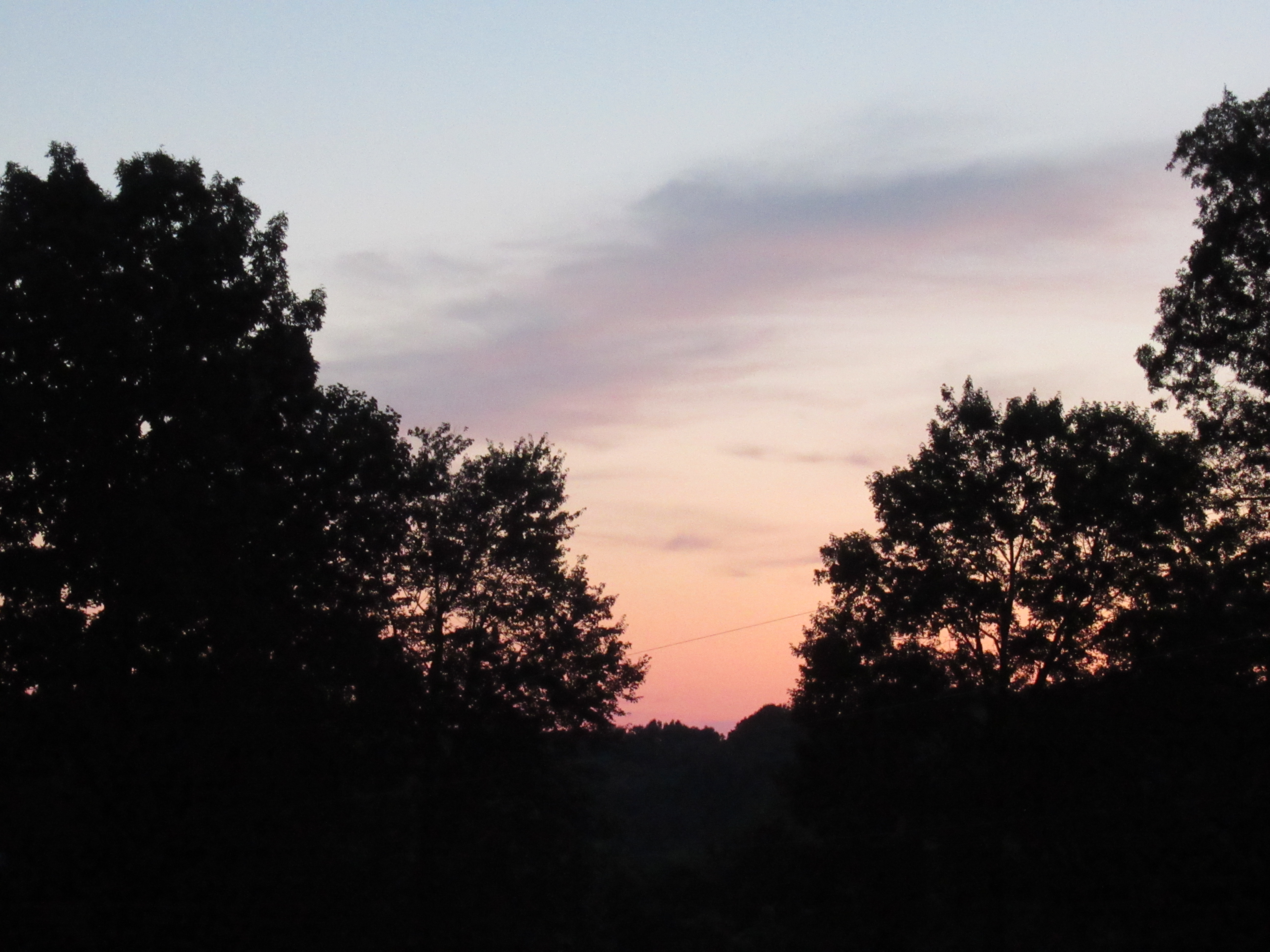
Evenings draw in, mornings are misty dark.
These times of transition arrive on schedule, not unexpected, yet each season catching at me with a sense of wonder.

Nasturtiums were slow to flourish from spring plantings.

This one growing in the big pot at the corner of the greenhouse is unique. I'm hoping it has dropped seeds for another summer.

Two years ago gold nasturtiums rampaged up the greenhouse wall.

Ragged zinnias, that appeared among pepper plants in the veg garden.


Clematis Samaritan Jo died back to the ground after early summer flowering, then suddenly clambered to the top of the trellis with fresh growth.

The fall blossoms are slightly paler in color than in the spring.

A bumble bee cold and still on a velvety spray of celosia.

The golden nasturtium got in the line-up twice.

Violas tweaked out of the pots side-lined after spring bloom and grown to blossoming size.

Lavender and thyme sown in the spring but didn't flourish until later.


.JPG)
.JPG)