Thursday, May 19, 2022

Beauty: Mid-May Garden Journal


Clematis Duchess of Edinburgh had a rough start to the season; mid-April frosts as she emerged from dormancy; a dose of cold rain and hail during the first weekend of May. I trimmed off blighted leaves and stems; the reward has been two blossoms. I hope for a reblooming in early September.


Samaritan Jo has a semi-dwarf mounding habit and was easier to cover during the April frosts. 


Edita, also a low growing variety has entwined with Samaritan Jo.


Dr. Ruppel, planted in 2021, is the closest I could find to the heritage variety Nellie Moser. Several of the latest blooms have a deeper magenta hue than usual.


Here is the contrast between earlier and later blooms--both are more vivid than Nellie Moser.


Arabella--a struggling small clematis reaching for the wonky fence. 

Clematis Jackmanni--the last of my collection to bloom.
It is considered hardy to Ag. zone 4--my Vermont garden was borderline for zone 4 plants and I never ventured a clematis.


From wikipedia: Clematis 'Jackmanii' is a Clematis cultivar which, when it was introduced in 1862, was the first of the modern large-flowered hybrid clematises of gardens. It is a climber with large violet-purple blooms, still among the most familiar climbers seen in gardens. It was produced from crosses made by the prominent nurseryman George Jackman (1837–1887),[1] of Jackman & Sons, Woking, Surrey. 


White flowered clematis, the only survivor of the bargain assortment ordered three years ago from Spring Valley nursery. The tiny plants, mere 'slips' were indifferently packaged with labels that fell out of the shipping box when I removed the plants. I appreciate the delicate shading that enhances white flowers.
When we moved into our first Kentucky property in 2010 I was delighted to find two clematis, 'Candida' and 'Nellie Moser' starting their spring climb up a trellis improvised from chicken wire and stakes. During the years we lived there an elegant trellis was provided by son-in-law Matt, which encouraged new growth. Nellie Moser clambered into an adjacent nandina shrub.
Neither clematis was in bloom when we moved from that property in October, 2014. I hastily dug some small roots, hoping I had some of each heritage plant, but only 'Candida' made the move.


Single white peony before rain.


Very little definition in this photo as I wanted a view of the peony group.


Familiar raspberry red peony, probably Karl Rosenfeld.
This vintage peony was a mainstay in the dooryards of old farmsteads and village houses in my native New England, often in company with white Maxima. We didn't call them by 'names'--a root of 'red' or 'white' might be shared with a special friend or neighbor. 


This double white was purchased several years ago and moved to our present location in the fall of 2018. It doesn't have the slender pink anthers [?] which distinguish Maxima. 


No name tag on this favorite single white--offerings at big box garden centers are often an assortment.


Sarah Bernhardt, a familiar vintage pink.


The burst of hail mid-morning of May 7th, sliced off the tips of foxglove, shredded clematis blooms, pummeled the beet and lettuce seedlings in the raised planting boxes.

Decapitated foxglove still blooms.


This is one of my most prolific foxgloves. It produces 'babies' each season which I collect and pot on. 


The foxglove that appears cream/yellow in bud opens to a pale lavender pink.
I think I have three distinct varieties in this wall planting. Sutton's Apricot and a white flowering variety didn't reappear after the second year, nor can I distinguish any that might be from the Camelot plants. I will take foxglove in any coloration they care to perpetuate, and have allowed them to grow in close proximity to the David Austin roses if they so choose.


David Austin "Queen of Sweden'--a very upright rose bush.

Beautiful in all phases.


David Austin "Roald Dahl"--sprawling with lax habit, blooms early and late.

Roald Dahl
As the blossoms fade they take on a creamy pinkish hue with darker pink freckles.

David Austin, 'The Poet's Wife'

The Poet's Wife


The season of roses is brief here in south-central Kentucky. Frost always hits the plants as they begin to break dormancy; I can plan on pruning twice before the shrubs are in full vigorous leaf. Perhaps three weeks or at best four in exuberant bloom before hot and humid weather invites Japanese beetles and sawfly larvae. 
A vase of blooms is pretty for a day or two then walking past I hear the whisper of falling petals.
I take endless photos each year--cherishing the brevity of beauty.


 

Wednesday, May 18, 2022

Speck Ridge


On Friday afternoon we decided to drive to the produce auction on Speck Ridge Road.
This is a smaller venue than Casey County Produce Auction which has been a fairly frequent destination when we are hoping to buy canning tomatoes later in the season.
Both auctions are run by Amish/Mennonite communities and many of the vendors are local Amish who raise early veg and flowers in greenhouses.


I sneaked this distance shot of Amish men waiting for the sale to begin. We noticed this was a different group of Amish--no familiar faces.
The auction was scheduled for 4:30. Jim decided we should be there early--which we certainly were. An hour's wait as the auctioneer didn't get started until 5.
I couldn't understand his rapid chanting; even J. who is accustomed to auctions found this man difficult to follow.


Most of the vendors arrived in horse-drawn conveyances. I was amused by this 'unequally yoked' team----a mule and a horse


I had driven to the big greenhouse/nursery next door to the auction barn, but still had time to wander along the hitching rails and enjoy the horses.


This horse was very muscular, perhaps more of a draft horse heritage than the usual finer-boned buggy horse.

This one amused me--a typical 'Amish haircut!'


We didn't see this one arrive--a miniature horse with a miniscule cart in tow.


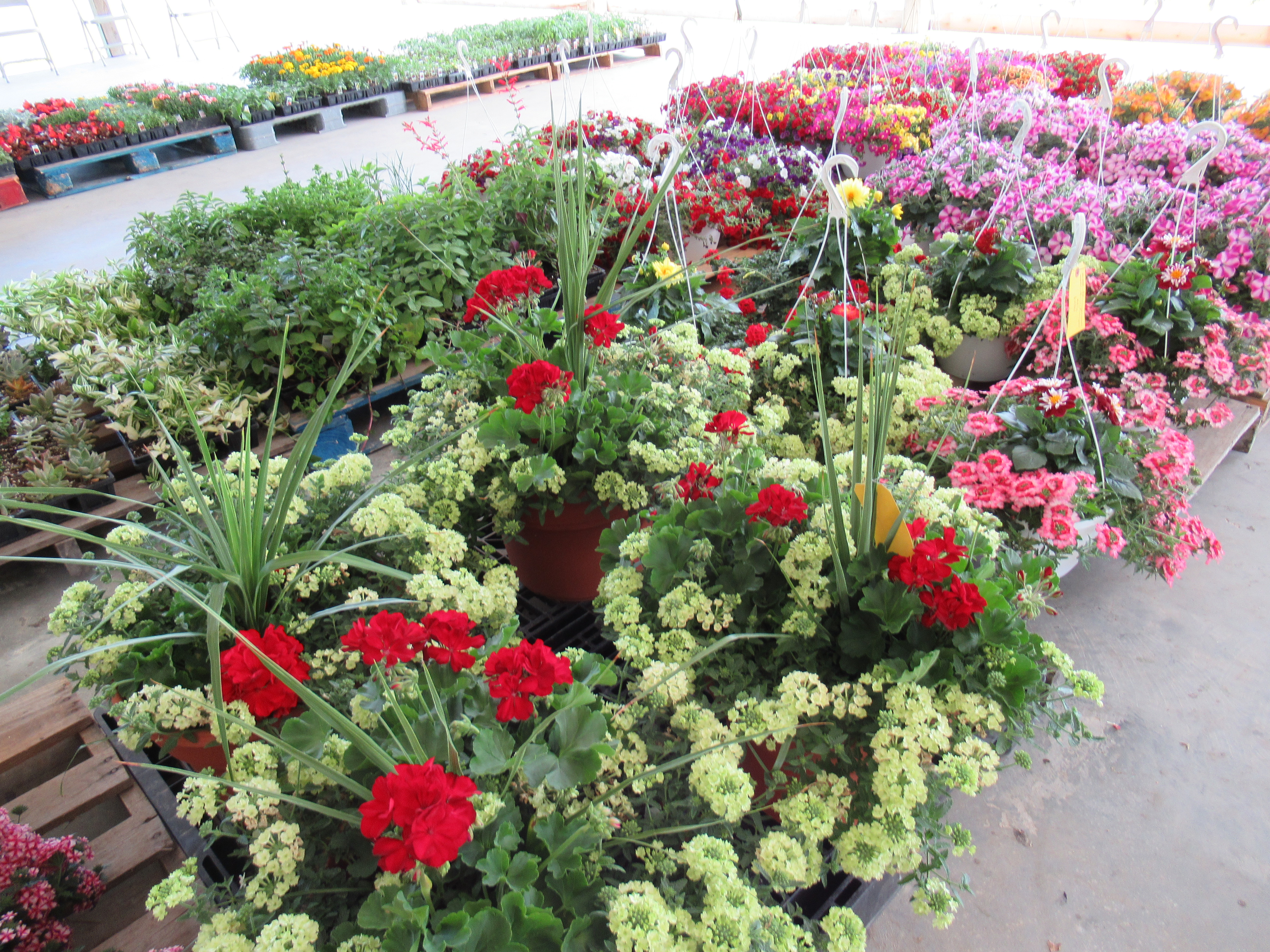
Most of the offerings were bedding plants in flats and hanging baskets.


Beautiful in full bloom, perhaps intended to be at their best for Mother's Day gifts and will now shortly need some grooming.


Most of the flowering plants are bought up by small retailers. Some will go to seasonal 'stands;' others will likely be sold from the back of a pickup truck from a parking lot. This is how Jim purchased the hanging basket which he gifted me last month.
The plants sell in lots for prices that are dishearteningly low for the vendors, making it possible for the retailers to enjoy a large mark-up.
There was only a small amount of fresh produce on offer--we came home with asparagus, beets, small early cabbage, cucumbers --all but the asparagus raised in 'hoop houses' or cold frames.


Tuesday, April 26, 2022

April Gardening: Journal

Clematis Candida

Cool mornings early in the week with a crescendo of warmth toward the weekend.
I began on Wednesday to prune and tie up the clematis. Duchess of Edinburgh which was the most affected by frost has benefited from the trim and the warmer days to put out encouraging new tendrils. 

On Wednesday I drove to my favorite nursery, Homestead Gardens, in the South Fork community. 
I came home with two dwarf nepetas--something I've been coveting, an assortment of bush type tomato plants, a lush hanging basket of mini-petunias as a gift for a friend, 5 assorted Gazanias for Gina.
Friday temps soared into the 80's F. We opened windows, worked at outside chores. 

I moved over-wintered rosemarys from the crowded table in the sunroom to the south/east porch and began cleanup of the sunroom--sweeping up dropped needles and attacking numerous 'stink bugs' that seemed to literally come out of the woodwork around the south-facing windows.
The tomato plants I purchased were in the usual tiny plastic 4-packs and needed to be potted on. J. came home from getting milk at the Beachy's with 8 leggy 'Early Girl' tomatoes which also needed plonking in much deeper pots. He is itching to get things into the garden, but the soil is still damp and heavy. A frost in early May is not unheard of. The tomato plants will be much safer in my little greenhouse until the weather settles.


Candida, for all that she insists on blooming too early each spring is my favorite clematis, well worth the aggravation of shrouding in protective coverings during April's frosts.
During her too brief season of bloom I take photos nearly every day.


The lilacs are now in full bloom; their sweet scent carries me back to many decades of springtime in New England. I remember lilacs with gnarly trunks and branches reaching for the eaves of a farmhouse ell, unpruned, shaped by harsh winters and deep snows. Often lilacs remained to mark the site of a farmhouse no longer standing, victim of fire or long neglect.

I recall so vividly a certain afternoon in late May. My best friend Linda and I were strolling along the dirt road that stretched the two miles between her house and mine when at a bend in the road where no house stood, we caught the unmistakable scent of lilacs, Clambering over a rail fence we plodded through a hilly pasture and found the purple lilac in bloom near the tumbled fieldstones of an old foundation.


Pinks raised from seed in 2020 have settled in along the west retaining wall, spreading in sturdy clumps in spite of inhospitable soil. 
Behind the pinks and the foxglove are the weeds which persist around the flat creek rocks laid as a walkway last spring. 
It is very evident that I should have put down a weed barrier before arranging the stones.
My on-going battle with invasive and persistent weeds is not one that I am winning.


Gazania for Gina--they have gone home with her, given larger pots in which to grow a bit while she decides where to put them for the summer.


Time spent in my greenhouse, potting up, sowing seeds, time of contentment.


The west garden tonight at 8 p.m.--the weeds not too much in evidence in this photo.
I tied up both clematis to the trellis arch--Jackmanii and Dr. Ruppel. 
The roses have been pruned as has the butterfly bush which was labeled as 'dwarf' but is obviously not of that designation. 


Centranthus Ruber/Red Valerian--a sturdy clump in the corner of the wall, has set some new plants which have invaded the space where miniature lilies are slowly multiplying.


Willis still faithfully follows me about and oversees my gardening tasks.


Shelby-cat whisked out the front door on Thursday morning, having spent the night in J's closet [she has a thing about closets and often has to be extracted.] I was surprised when she did not appear when the cats where called for their early afternoon 'tea,' nor did she show up while I unpegged laundry from the back porch lines. 
I was really concerned that she did not respond to my calling, didn't come in for the night. Friday--no Shelby, ditto on Saturday. J. had seen a coyote crossing the lower end of the property earlier in the week. Shelby loves to prowl in the south ravine usually appearing from there when she is called. I struggled to accept the idea that she had likely met a sad end as a meal for the coyote.

Sunday forenoon when I opened the front door she shot in! 
I scooped her up wondering if some lingering scent on her fur would suggest that she had been shut up in a house or barn--her coat smelled only of fresh spring air and green plants. Up a tree? Did she go up a tree in the ravine and forget how to climb down? Of course we won't ever know.
She gobbled a helping of tinned food, raced to J's chair in front of his TV, where she gave herself a thorough wash then curled herself in a heap on his bed where she stayed until evening.


Elmo goes out and about although I have kept Rosie in the house.
Both have been enjoying the open doors into the sunroom and the east porch.

A female hummingbird [at least one] this weekend joined the males who arrived on the 13th.
When I am too exhausted to continue garden chores I retreat to the rocking chair on the porch with a book and a glass of iced tea. Rosie joins me to 'bird watch'--and has to be discouraged from leaping up the screen for a closer look at the hummers. 

This morning was chilly--a mere 47F. which wasn't conducive to early morning coffee on the porch. 
By noon the sky was blue, the sun shining but the wind was brisk. 

I spent time in the greenhouse after our early supper, sowing seeds of basil, cosmos, rudbeckia and several varieties of coneflower. Two rows of beets and two of Swiss chard planted in one of the raised beds. Seed potatoes planted two weeks ago are not showing, but J. gently uncovered enough to determine that the spuds haven't rotted--merely waiting for warmer weather to push through the still cold soil.
I tied up clematis in the last golden light of the day, walked about contemplating the burden of work needed to tidy the perennial beds, hoping for a solution that will allow for flowers without the heavy work I can no longer do. 
Surely I will find a way!


Tuesday, April 19, 2022

A Few Lovely Mornings


Daily emerging green leaves add light and fresh color.
Dogwoods are in bloom spreading their dainty skirts of creamy white.
Green grass has pushed up through the bleached stubble of winter fields.
Bluebirds, goldfinches, sparrows, are all busy with the duties of the season.
The voices of the woodpeckers and the sounds of their hammering on trees in the ravines are an accompaniment to outside chores.
They are shy birds, thus the flash of a red crest or a view of their black and white bodies darting from tree to tree is a special joy.


A vigorous clump of coneflowers growing too close to the south-east retaining wall.  My plan of the moment is to move self-sown coneflowers along with native asters and prairie sage, wintered over in pots, to the plot outside the west windows.  My hope is for these sturdy plants to colonize and flourish in that rather rough space.


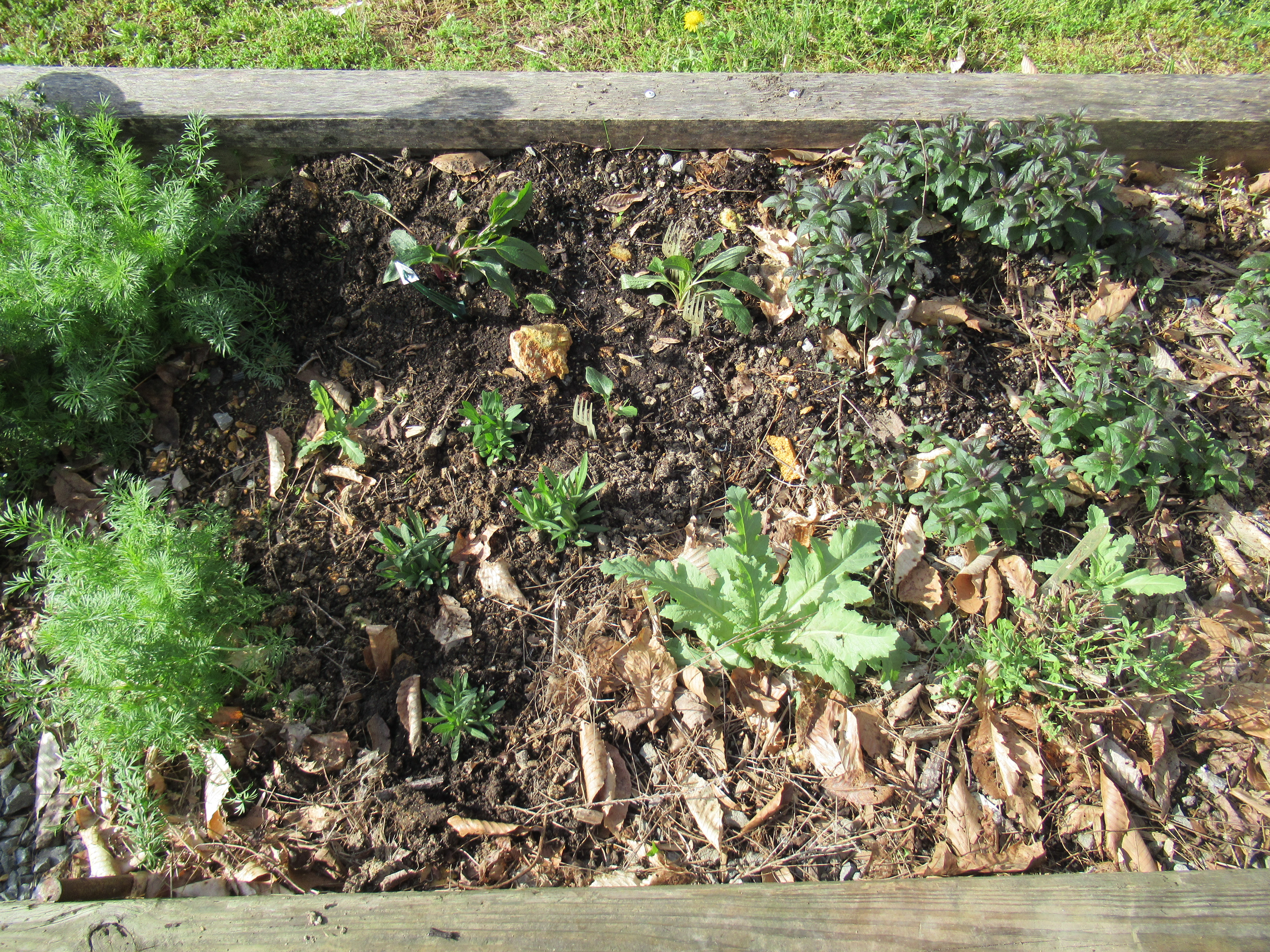
Plants set into the raised bed near the front steps. Several lavenders there winter-killed and have been removed. Nigella self sows in abundance as has poppy 'Lauren's Grape.' I hoped to see red poppies in this space but none emerged.


The lilacs gifted to me by Howard and Dawn during our first spring in the new house are blossoming for the first time. One appears to have the traditional 'blue' tint while the other is red-purple.


The frilly petals of ranunculus are like crinolines.


Dawn appeared on her way home from work one evening last week with two potted ranunculus. I've never grown these before and I'm intrigued with their multi-layered petals. Both plants have been moved into larger pots and set on the east porch. I've learned that they are a tuberous plant flowering in the cool weeks of spring then fading with summer heat.


The ranunculus and the planter of petunias and verbena are living on the porch, but were moved inside to avoid being nipped by frost on Monday night.


Several cool sunny days encouraged the lilacs.


This one seems the more forward of the two.


I treasure this clematis, the heirloom 'Candida', discovered at our first Kentucky home. I moved a hastily potted portion of roots to the Amish farmhouse we renovated, then moved roots again to the site of this home. After a winter spent in a large pot a wonky fence was hastily constructed by Jim to support the plant and its companions. Candida is an early bloomer and always puts out buds just as late frosts come along. 
A run of bright mornings and warmish afternoons deteriorated into rain late on Easter Sunday. Monday was bleak and rainy with frost warnings published for our area. Early in the evening I went out with an armload of old sheets, pillowcases and tablecloths [all optimistically washed and stored away after the last round of cold weather] and battling a cruel wind managed to cover all the clematis. 
It was a choice between flattening early blooms or risking frost damage. It was 34 F. at 7:30 this morning, a mere 2 degrees above the frost mark.

Duchess of Edinburgh, planted next to Candida didn't prove as hardy through the snow and cold which struck during the second weekend of April. Leaves at the base of the plant seem healthy, so perhaps a severe pruning away of damaged leaves and stems will revive the Duchess for later blooming. 

Two male hummingbirds arrived mid-week and discovered the syrup feeders hung from the eaves of the east porch. I feared for them in the harsh wind and biting cold of Monday night, but they have emerged to fortify themselves at the feeders. 


Green tints in the hearts of Candida blooms delight me.


Jane magnolias have triumphed over the snow and frost that earlier blighted them. 
Nature has a miraculous perseverance that encourages me.